Play is of great importance in your child's life
December 16, 2014
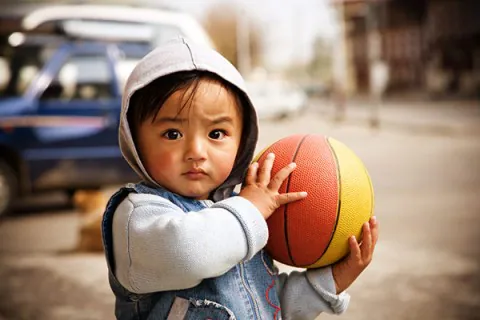
Plato saw play as a way to teach children the skills they would need as adults. A philosopher named Comenius wrote in his book, *The School of Childhood*: “As long as children’s play does not harm…”
As for others, we should encourage them to do it instead of forbidding them from it, because this is their method of education.”
Dr. Saadia Bahader, Professor of Developmental Psychology and President of the Friends of Childhood Association in Egypt, believes that group games accompanied by singing and movement, such as hide-and-seek, are simplified situations of life created by popular wisdom throughout the ages, and the child may invent some of them in agreement with the other children around him.
Dr. Mohsen Al-Arqan, Professor of Sociology at the Social Research Center in Cairo, believes that play in human life is not limited to childhood. Games exist in every stage of life, but in different forms. This does not negate the fact that play occupies a large place during childhood because it is the means by which the child deals with life, and his means of expressing what he wants, as he shares fun with others and learns to deal with adults.
Group play during the first five years of a child's life has an effect on children's emotional development. Therefore, a child who is deprived of play becomes emotionally numb, more selfish, and less profound.
Dr. Saadia Bahader picks up the thread again, emphasizing that the common perception of play as mere amusement is a misconception. Even play that might be considered purely recreational is a way for adults to impart to children what they wish to learn. During play, habits and behavioral patterns are transmitted, personality is formed, and children become more balanced and have broader horizons. For example, through role-playing games (like playing bride and groom), children can acquire social skills and learn to perform other social roles. Play is a child's natural occupation, an innate characteristic; it is an art, a way of life, and a child's primary occupation, capable of shaping their inclinations.
When a child invents a game, they are trying to satisfy their need for enjoyment, relaxation, or activity, depending on the game they are playing. Children name their games with a symbol they recognize, and they derive this symbol from the environment in which they live.
Therefore, we find that the same game has different names from one city to another, and its style may differ according to the culture of the society in which it originated, and it becomes an identity for the environment in which it originated.
Dr. Saadia Bahader warns parents who deprive their children of playing with others, as this contributes to making them introverted, friendless, and without experiences. She also notes that children playing with toy guns and other items sold in toy stores leads to the development of violence and hinders their social development. In contrast, she points out that traditional games cultivate a child's muscular and neurological skills, as well as their sense of self and belonging. For example, in the Kerdasa area of Giza, they make a cotton doll in the shape of an Egyptian peasant woman, complete with a veil, earrings, and a beautiful necklace, which helps children discover themselves and develop their appreciation for colors.
In developed countries, cotton dolls are considered the newest and healthiest children's toys, and they are sold at much higher prices than factory-made toys.
Transferred